In the Canary Islands’ event sector, technical infrastructure is often the first major headache. A setup that takes longer than planned or a structure that lacks the necessary load guarantees can jeopardize the entire production.
As specialists in 360º production at Eventalia Group, we have proven that the difference between a conventional stage and a mobile one isn’t just aesthetic it’s a matter of efficiency

Technical Solutions: Infrastructure ready in record time
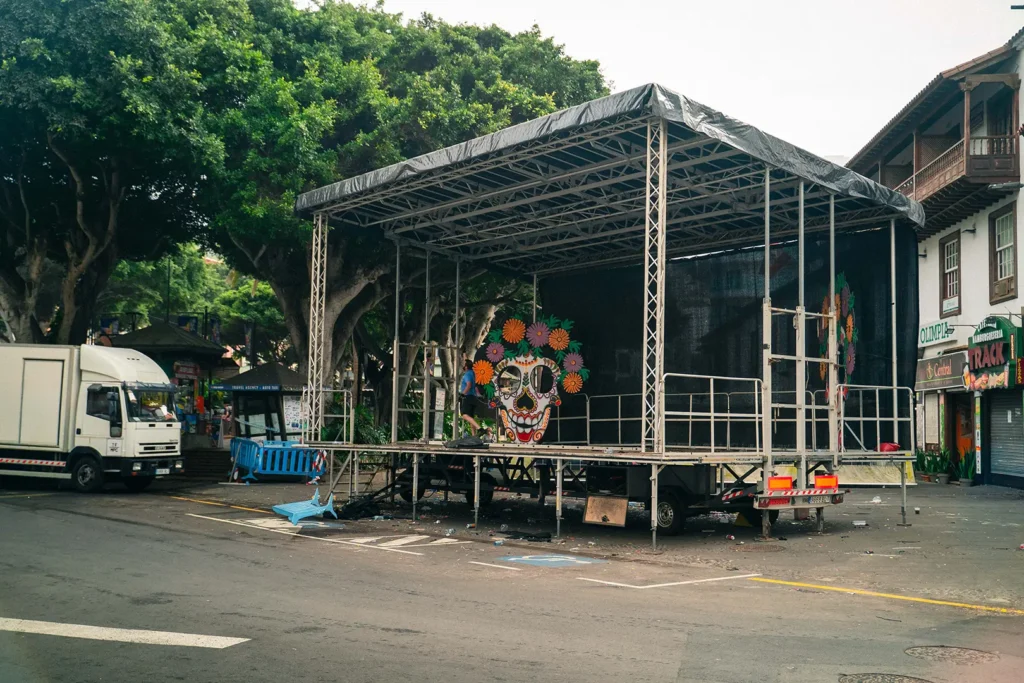
Immediacy is key in today’s production world. Thanks to our mobile stage technology and a specialized human team, we transform any space into a high-level venue in a matter of hours.
This responsiveness not only optimizes logistical and personnel costs but also guarantees a solid, safe, and certified structure, ready for the show exactly when the schedule demands it. At Eventalia Group, we understand that every minute counts; that is why our infrastructure is designed to be operational immediately, allowing the rest of the technical departments to start their work without structural delays or unforeseen issues.
1. Drastic Reduction in Public Road Occupation Times
Assembling a traditional stage structure requires several days of work, leading to prolonged traffic cuts and high municipal fees for land occupation.
A mobile stage deploys mechanically in just a few hours. This ensures that the impact on the urban environment is minimal, facilitating permit management and reducing inconvenience to citizens.
2. Certified Load Capacity and Structural Safety
One of the biggest issues with modular structures is the weight limit on the roof. Installing large-format LED screens or heavy line-array sound systems sometimes requires complex reinforcements.
Our mobile stages are designed as a solid engineering unit. Their hydraulic roofs have certified load capacities and fixed rigging points, allowing the technical team to work with total safety and precision from the very first moment.
3. Stability on Uneven Ground or Slopes
Not all events are held on perfectly flat surfaces. Leveling a traditional stage on a sloping square or irregular terrain is often a slow and unreliable process.
These systems feature independent hydraulic leveling legs. This guarantees a perfectly stable and flat platform on almost any surface, eliminating vibrations and structural risks.
4. Streamlining the Logistics Chain
A standard stage depends on hundreds of parts, bolts, and several transport trucks. If a critical piece fails or a truck is delayed, the assembly stops. The mobile stage is the vehicle itself. Everything needed for the structure is integrated into the unit. This reduces the logistical margin of error to a minimum and guarantees that if the truck has arrived, the stage will be ready on time.
5. Optimization of Personnel and Assembly Costs
The longer the assembly time and the higher the number of parts, the more technical staff is required, which sky-rockets the event’s operating costs.
Thanks to its automated deployment system, only one person is needed to set up the structure and have everything ready for your event. This allows the budget to be diverted to other production areas, such as lighting or visual content, without sacrificing the quality of the foundation.
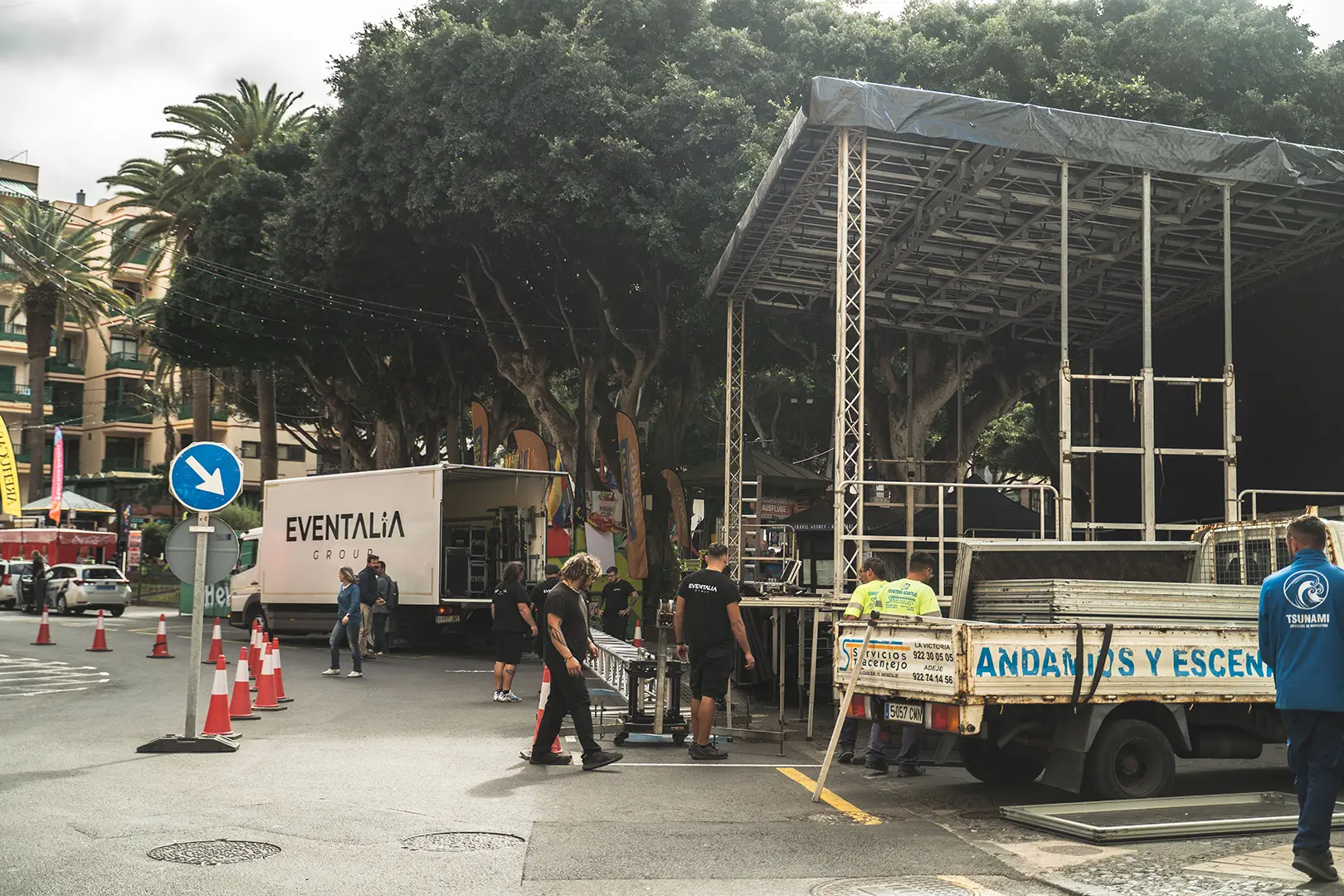
If you are looking for a technical solution that will not create additional problems for your organization, our fleet of scenarios is ready to operate anywhere in the islands