The Physics of Sound
In the vacuum of space, absolute silence reigns.
In an absolute vacuum, there are no particles to displace. Sound is, in essence, mechanical energy in motion: waves that require a physical medium, such as air, to travel. Here on Earth, the true technical challenge isn’t just generating volume, but mastering this physics to move massive volumes of air with millimetric precision, ensuring the acoustic impact is physically felt.
This is exactly the science behind the equipment that has just landed to redefine the industry: the new Adamson system.
Behind the Curtain
In the vacuum of space, absolute silence reigns.
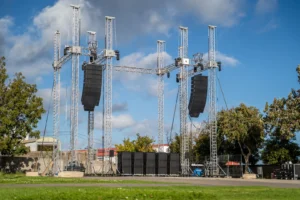
At Eventalia Group, we are taking a definitive leap forward by adding the Adamson Vergence system (VGt and VGs) to our inventory. Capable of reaching 151 dB SPL, this equipment redefines large-scale sound thanks to its innovative cardioid control, which guarantees a clean stage and absolute acoustic precision.
To celebrate its arrival, we hosted an official technical certification and an exclusive listening session at our headquarters alongside SeeSound, where engineers and industry colleagues tested its live performance.
Want to know all the technical details? Don’t miss our interview with Aaron B. on the blog.
Production Analysis
Burguer Fest
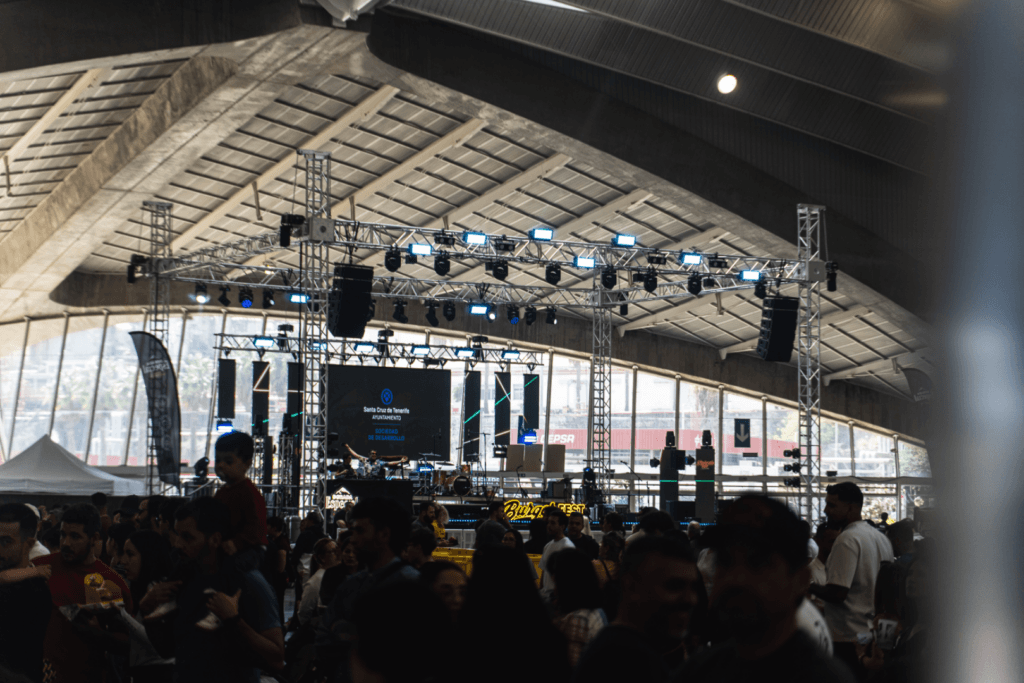
We produced the grand finale of the islands’ largest gastronomic festival at the Recinto Ferial. This event required a massive deployment of infrastructure, sound, and comfort.
Sound & Lighting Engineering: It wasn’t just about volume, but about designing intelligent coverage. We calculated the angles of our systems so that the music remained crystal clear both on the main stage and in the food truck area.
Stage & Structures: We built a solid, reinforced stage to support PA systems and LED screens. Additionally, we installed large-scale structures to create shade zones, vital for attendee comfort during sunny hours.
Furniture & Logistics: We managed the assembly of rest and dining areas with our own inventory of tables and benches, ensuring a cohesive aesthetic and efficient crowd flow throughout the venue.
The Radar
Music Residencies: The end of traditional tours?
The announcement of Shakira’s eleven dates in Madrid signals the start of the «residency» model in Spain, a trend where the artist remains at a single venue.
From a technical perspective, the most relevant aspect is the construction of an exclusive, fixed stage for this cycle of concerts. By eliminating the daily setup and teardown required for touring, infrastructure engineering can be designed without the constraints of frequent transport.
This allows for higher load capacities, complex visual systems, and static audio calibration, optimizing technical precision to deliver a highly personalized large-scale experience.
While this means massive logistical savings for agencies, the model shifts the full cost (and carbon footprint) to the attendee, who now assumes travel and accommodation expenses. For production, this creates a new challenge: host cities become saturated, and the industry must guarantee large-scale infrastructures that support intensive use for weeks without losing quality or safety
Where is the live industry headed?

Technical Solutions
Truss Systems: High-resistance modular engineering
Truss Systems: High-resistance modular engineering The truss is the critical infrastructure—the true «skeleton»—of any professional setup.
These modular aluminum structures allow us to safely suspend the most demanding loads, ensuring total stability in any environment.
Key applications in our productions:
Stage & Festival Rigging: Safe flying of Line Array (PA) systems and complex robotic lighting bridges.
LED Screen Supports: Custom configurations that guarantee the stability of large-format video modules against wind or uneven ground.
Ephemeral Architecture & Photocalls: Self-supporting structures for tensioning large-scale banners without risk of tipping.
Shade Structures: As demonstrated at the recent Burger Fest, creating stable aerial volumes and textile roofs to maximize public comfort in open spaces.

Technical Know-How
Time Alignment: The (open) secret of acoustic coherence in large venues
Sound travels at approximately 343 meters per second.
In large-scale productions, this means sound from the main stage reaches distant areas with a noticeable lag compared to reinforcement speakers, causing the annoying «echo» effect
To neutralize this, we implement delay lines configured to the millisecond.
It is precisely at this level of detail where the sound technician and systems engineer become irreplaceable.
No matter how much cutting-edge technology we deploy, it is the calculations, hands, and ears of our team that guarantee acoustic perfection.
If you enjoyed this deep dive into the Adamson system or the logistics behind Burger Fest, you’ll love what’s coming next month. Join the Eventalia Group newsletter.